Fridays!
Fridays have been my ‘me-day’ in the last few years. It’s the day I’m going after my own things and curiosities, besides any duties, priorities, obligations and anything else that keeps my mind of wandering. I haven’t been able to live up to the tradition in the past few month, either because my new paid position demanded so, or I urgently needed to put in the time for writing my dissertation. That said, I get the feeling that I’m getting close to take that kind of time for myself again. With some time to breath and reflect, I started to think about what I want to do now, next to work, with my newfound freedom and powers? I need to do that proactively, or risk me saying yes to any kind of collaboration coming in. I love those, but I would also be able to sometimes concentrate on my own interests. I really liked doing that during my dissertation and I believe it was kind of worth it, that I actually had something to say.
In order to give myself a bit of structure and accountability, I setup ~routine, a coding club inspired by what I was able to observe from distance in the fediverse, and for which I am really jealous. This format should give myself a bit of discipline to keep on experimenting with coding, and hopefully create a little bit of community around that interest. I tried to prescribe as little as possible, and just make some of the ressources available that I have at my disposal now (heated and comfy space where we can hang out). I have a short description living on Cryptpad 1, but since I don’t know if it will be there forever, I also include the description here:
Coding is a situated practice, meaning it can only become better if done together.
~routineis an intention and a wish to code regularly, with others, calmly, critically, cutesy, in whatever form. The format takes inspiration from lowkey’s critical coding club and varia’s calm coding. Come by to code, come by to knit, or simply come by for a cup of tea. Everything else is up for debate at this point.
Research Fridays?
I want to do something similar with the ‘me-day’ Fridays and declared them Research Fridays by setting up a reccuring reminder. Knowing myself, let’s see how long this lasts. But at least nobody can say that I didn’t try. I’ve got some research threads I would like to follow, ongoing curiosities and open questions that I’m left with after my dissertation. Some of which I already feel not that relevant or interesting anymore. Let’s list them for the sake of it.
- Everything is a Video Game Engine if You Are Brave Enough
- Demaking Video Games Says Something About Video Game Making
- Computing, But With Knots
- Communities of Experimental Programming Language Design
I believe I will not want to follow 1 and 2, even if 1 is a topic I’m onto since a while and already have some nice cases. It’s basically a case study of video games that were made with stuff you wouldn’t make video games with. Like Fontemon 2, a Pokemon parody using the ligature function of font files. I love that kind of stuff. But I don’t feel too much like doing more video game studies right now. 2 is a bit closer to code studies, and about the process of remaking newer games on older hardware. I think that is interesting and understudied, but it’s also too close to video game studies. 3 is something I think I keep for #DecemberAdventure. It’s mostly an experimental approach that emerged out of looking into logic gates realised through origami 3, Quipu 4, and knotting friendship bracelets 5, especially the alpha pattern technique. Sounds wild, stay tuned.
Which leaves me with 4, which is another subject I got to love through the Fediverse and it’s participants. post.lurk.org and merveilles.town host a plethora of people that create their own programming languages. I followed that for a while and tried some of them. As always, I’m not that much interested in what I can actually do with the language, but in the relationship between person and technological object, and what comes of this relation. So I kept up collecting these little beautiful works of art and culture, like uxn 6, kiki 7, fungus 8, or konilo 9. I wasn’t sure what perspective would be interesting to follow up until I read ‘Gardens, Not Roads: Cultivating Open Source Communities’ 10, in which Tara Tarakiyee talks about open source being ‘communities of practice’, which ‘describes groups of people who share a craft, profession, or passion and learn together through regular interaction’.
Not sure why, yet, but this feels important. In my dissertation I concentrated very much on the relationships between single programmer, their code, and the production/encoding/transfer of meaning and culture. I tried to avoid commercial productions, and focus on vernacular practices. I believe that this perspective is essential in my endevour to explore code as an important human document. Programming and code differ depending on the motivation that drives writing software, which is also my opinion on code generatd through AI, but that’s for another day. Now, I guess looking at these rather personal and experimental programming language design projects would let me stay within that framework. I’m not sure what that means in terms of method, but I’m looking forward to learn more about sociological approaches, if I will go down that path. But I would certainly keep parts of what I developed during my research so far, including interviews and close readings of constraints and affordances of the technical objects.
Let’s leave it at this for now and close of with some…
Sedum Apprection
Aren’t they lovely?
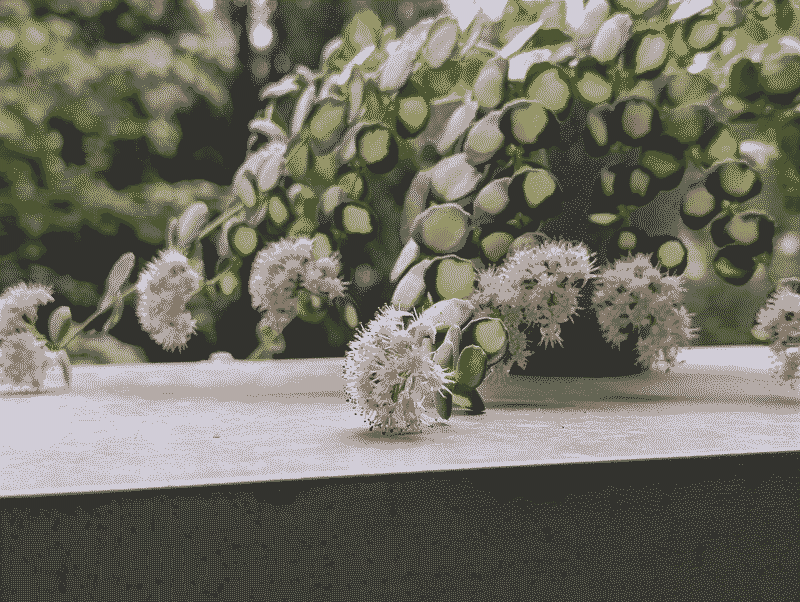
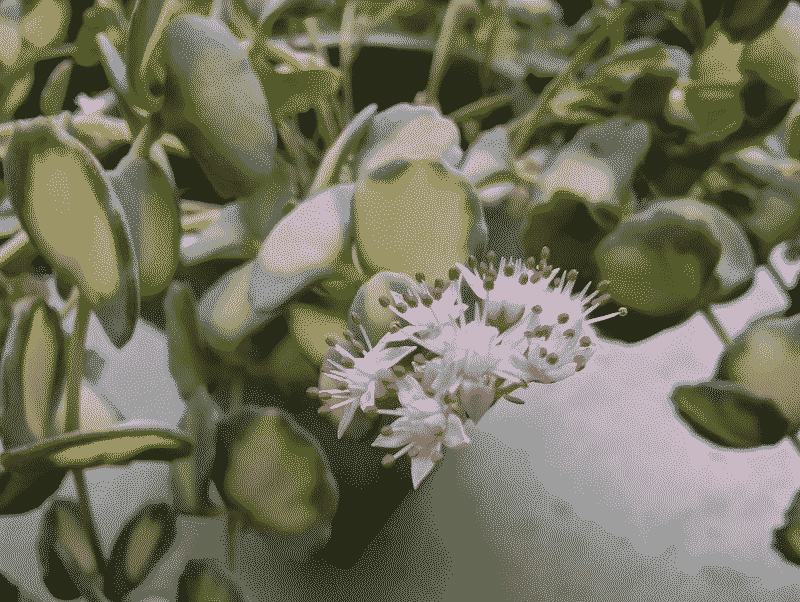
I like sedums 11 a lot. They’re pretty hardy and you’ll find them everywhere and in all kinds of shapes. They are a bit like cactii-moss. Some are really, really cute. I have a small collection at home that I just plucked in random places. The one above I found squatting a pot it shouldn’t be, next to the restaurant of a museum I visited with my partner and parents. Have you looked at these flowers!
Thanks, bye.